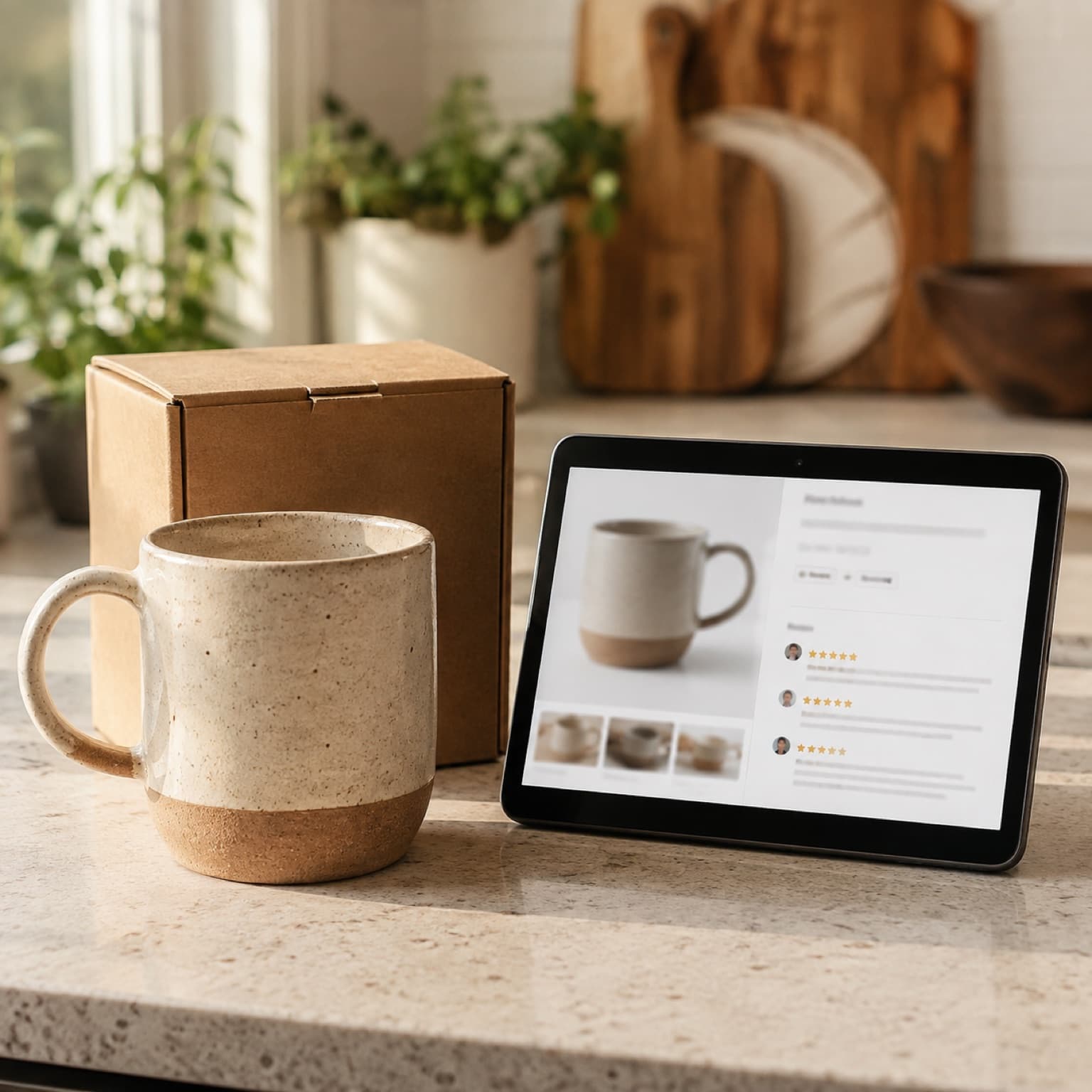
Collecting reviews is wasted effort if shoppers never see them. Review widgets and trust badges bring your social proof onto your own website — onto product pages, checkout, and the homepage — where it directly influences buying decisions. This guide explains where to place them and why they work.
You have done the hard work of collecting genuine reviews. But if they only live on a third-party profile page, most of your shoppers will never see them.
Review widgets fix that. They bring your social proof onto your own website — exactly where buying decisions are made.
Why Social Proof Works
People look to others when they are unsure. When a shopper sees that hundreds of customers before them had a good experience, the perceived risk of buying drops sharply.
That moment of reassurance is most valuable on your own site, on the page where someone is hovering over the "Buy" button — not on a separate site they may never visit. Getting reviews in the first place is covered in our guide to collecting more customer reviews; this article is about displaying them.
Where to Place Review Widgets
Placement matters as much as the reviews themselves:
Product pages
The highest-impact location. A shopper deciding on a specific item wants reassurance about that item. Show the rating and recent reviews right there.
Checkout
Last-minute doubt kills sales. A trust badge or rating summary at checkout reassures the shopper at the final hurdle.
Homepage
An overall rating and a rotating selection of reviews builds trust the moment a visitor arrives, before they have even started browsing.
Types of Widget
Different formats suit different jobs:
- Trust badges — a compact star rating and review count. Great for headers, footers, and checkout.
- Review carousels — a rotating feed of recent reviews. Good for homepages and landing pages.
- Review grids — a fuller wall of feedback for a dedicated reviews or testimonials page.
Used together, they reinforce trust at every step of the journey.
Rated Stores
Build a reputation customers actually trust.
Collect, verify and showcase genuine reviews — start free, no card required.
Get Started Free →The Verified-Reviews Advantage
A widget is only as persuasive as the reviews behind it. Shoppers are increasingly sceptical of testimonials that could be cherry-picked or invented. Widgets that display verified reviews — tied to genuine purchases — carry far more weight. We explain the difference in verified reviews vs unverified.
There is also an SEO benefit. Star ratings shown with the right structured data can appear as rich snippets in search results — see our review stars rich snippet guide — making your listing stand out before a shopper even clicks.
Keep It Honest
A widget should reflect your real rating, including the imperfect parts. Showing only five-star reviews looks staged and erodes trust. A genuine 4.6 with visible detail is far more convincing than a flawless 5.0. This is the same principle behind why transparency matters.
Getting Started
Rated Stores provides embeddable widgets that drop straight into your website and pull your latest verified reviews automatically — no manual updating, always current.
Explore the platform for merchants to see what is included, or sign up free to start collecting and displaying reviews.
Final Thoughts
Reviews you have collected but never display are a missed opportunity. Widgets put that trust to work on the pages that matter, at the moment that matters.
If you are already gathering reviews, displaying them well is the highest-return next step you can take.
Explore more:
Keep reading
Should I Buy Trustpilot Reviews? The Legal and Commercial Risks
Buying Trustpilot reviews can trigger legal, platform and reputational consequences. Here is what businesses should do instead.
Read article →
How to Respond to a Fake Review of Your Business
A calm, practical process for documenting, reporting and publicly responding to a review you believe is fake.
Read article →
Your Rights as a Reviewer: Online Reviews and UK Consumer Law
What UK law says about fake reviews, your right to leave honest feedback, and what businesses can and cannot do about your review.
Read article →