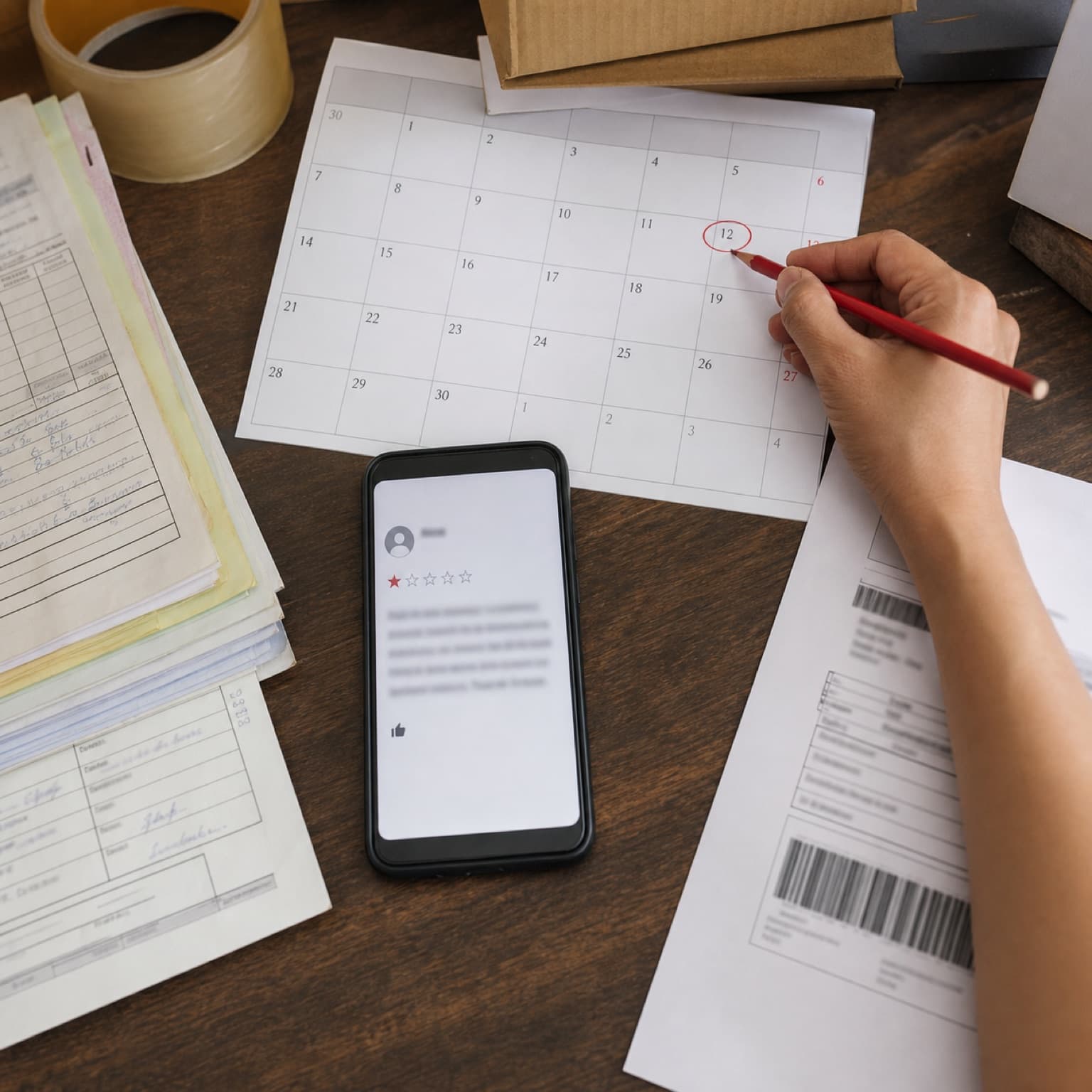
A review that does not match any customer record is frustrating, but an angry reply usually causes more damage than the review. This guide gives you a measured process for investigating it, reporting it and reassuring future customers.
A suspicious one-star review can feel personal. Perhaps you cannot match the name to an order, the description refers to a service you do not offer, or several hostile reviews appeared at once.
You may be right that it is fake. You may also be looking at a genuine customer using a different name. The safest response is therefore evidence first, emotion last.
Pause Before You Reply
Take a screenshot showing the review, reviewer name, date and profile URL. Record why it looks suspicious and check orders, bookings, support tickets and staff recollections.
Do not accuse the reviewer publicly while you are still investigating. A real customer may have ordered through a partner, used a relative's account or visited under another name.
Check the Platform's Rules
Report a review against a specific policy, not simply because it is negative. Relevant reasons may include:
- No genuine experience with the business
- A conflict of interest, such as a competitor or employee
- Harassment, personal information or abusive language
- Repeated content posted from multiple accounts
- Claims about a different business
Google's current policy, for example, says contributions must reflect a genuine experience and prohibits attempts to manipulate ratings. Each platform has its own evidence and appeal process, so use the closest matching category.
Write a Response for Future Customers
Your public reply is primarily for the people reading later. Keep it brief and factual:
We cannot identify an experience matching the details in this review. We take all feedback seriously and would like to investigate. Please contact us at [support channel] with your order or booking reference.
That response does three useful things: it shows you checked, avoids making an allegation you cannot yet prove, and gives a genuine customer a route to resolution.
Never publish order details, addresses, health information or private correspondence to prove your case.
Rated Stores
Build a reputation customers actually trust.
Collect, verify and showcase genuine reviews — start free, no card required.
Get Started Free →Submit Useful Evidence
Platforms make the decision, so organise the facts clearly. Explain which policy applies and attach the strongest available evidence: incompatible dates, a service you do not sell, copied wording, a disclosed conflict or a coordinated pattern.
“We dislike this review” is not evidence. A concise timeline is much easier for a moderator to assess.
What Not to Do
Do not threaten legal action in the heat of the moment. Do not ask friends or staff to drown the review out, and never offer the reviewer a reward for removing or revising it. Those tactics can create a second, more serious trust problem.
UK rules now prohibit fake and concealed incentivised reviews, while platforms may restrict profiles involved in fake engagement. Keep your own conduct clean.
Build Resilience With Genuine Reviews
One questionable review matters less when it sits among a steady history of detailed customer experiences. Ask every eligible customer for honest feedback using the same neutral process. Do not invite only the happiest customers.
If the review remains online, a professional response and a credible wider profile will usually tell shoppers everything they need to know.
Final Thoughts
Treat a suspected fake review like an incident to document, not an argument to win. Investigate carefully, report precisely, respond calmly and continue collecting genuine feedback. That protects both your reputation and your credibility.
Explore more:
Keep reading
Should I Buy Trustpilot Reviews? The Legal and Commercial Risks
Buying Trustpilot reviews can trigger legal, platform and reputational consequences. Here is what businesses should do instead.
Read article →
Your Rights as a Reviewer: Online Reviews and UK Consumer Law
What UK law says about fake reviews, your right to leave honest feedback, and what businesses can and cannot do about your review.
Read article →
How to Choose the Right Review Platform for Your Business in 2026
A practical buyer's guide to picking a review platform — the questions to ask, the features that matter, and the pitfalls to avoid.
Read article →