Most review platforms calculate scores using a simple average of star ratings.
At first glance, that seems fair.
But averages are easy to manipulate.
And in 2026, manipulation is exactly what regulators and consumers are worried about.
The Problem With Simple Averages
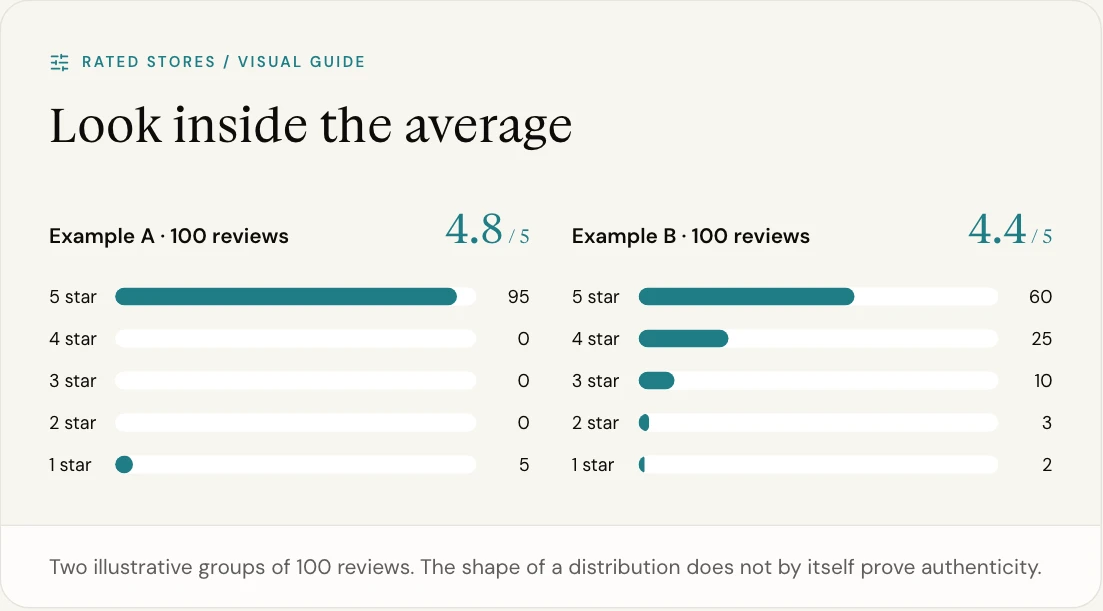
Imagine two businesses:
| Business | 5★ | 4★ | 3★ | 2★ | 1★ | Average |
|---|---|---|---|---|---|---|
| A | 95 | 0 | 0 | 0 | 5 | 4.8 |
| B | 60 | 25 | 10 | 3 | 2 | 4.4 |
Business A looks better on paper.
But Business B shows natural distribution.
Which one looks more authentic?
A simple average hides:
- Suspicious rating spikes
- Review timing anomalies
- Unnatural 5-star dominance
- Lack of mid-range feedback
What a Fair Review Score Should Include
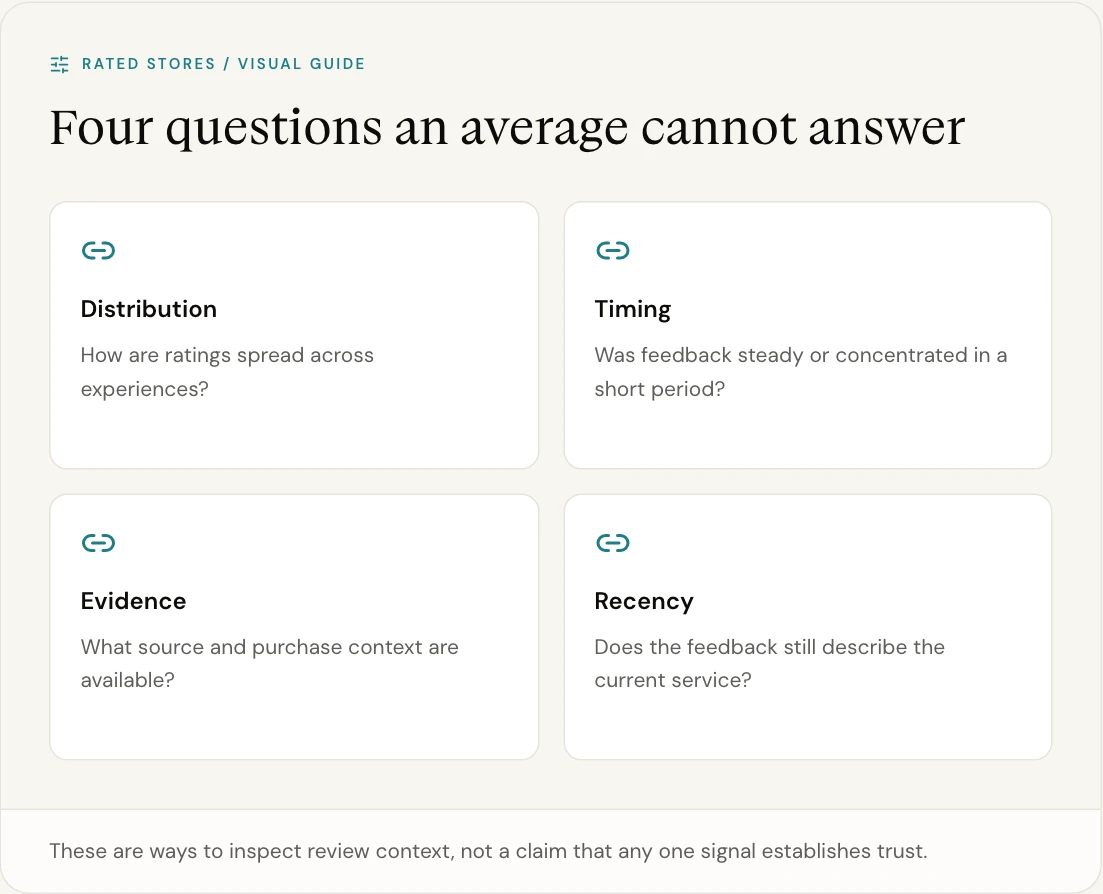
A modern scoring system should consider:
1. Rating Distribution
Are the reviews evenly distributed?
Or heavily skewed in a suspicious way?
2. Review Velocity
Did 200 five-star reviews appear in 48 hours?
Sudden surges are red flags.
3. Reviewer Credibility
Are reviews tied to verified purchases?
Are reviewer histories consistent?
4. Recency Weighting
Older reviews may not reflect current service quality.
Why Most Platforms Don’t Use Weighted Scoring
Because:
- Simple averages are easier to explain
- Complex scoring requires more infrastructure
- Transparency can reduce manipulation flexibility
Some platforms also prioritise:
- Subscription revenue
- Review volume
- Engagement metrics
Not necessarily authenticity.
How Rated Stores Calculates Scores Differently
Rated Stores uses a weighted review algorithm designed to:
- Identify unnatural distribution patterns
- Adjust for suspicious activity
- Reward consistency over volume
- Penalise obvious manipulation
Instead of asking “What is the average?”
We ask: “Does this pattern look real?”
The Future of Review Scoring
With new regulation emerging, scoring systems will need to evolve.
Consumers are becoming more sophisticated.
They understand:
- 5.0 stars can be suspicious
- No negative reviews is unrealistic
- Transparency matters more than perfection
The platforms that survive long-term will be those that prioritise credibility over cosmetic ratings.
Final Thoughts
Star averages are outdated.
Review scoring should reflect:
- Authenticity
- Transparency
- Distribution integrity
- Behavioural patterns
Anything less is just marketing math.
Related Pages
- UK Fake Review Ban 2026 — What Businesses Need to Know
- Why Transparency Matters
- Rated Stores vs Trustpilot